When you have lived in and moved around a particular place for many years, you can start to think you know it very well. And to an extent, you will, but surprises still occur. Especially in a city as big and old as London.
I’ve had three such surprises lately.
On Monday, walking through my nearest local park, not untypically, I was mentally shuffling a range of preoccupations: jumping between noting browning leaves on trees and their reluctance to drop this year, what to cook for the kids for tea, when to chase the plumber about fixing a leaky toilet and frets about a distinct lack of paid work. When, out of nowhere, I caught sight of something that cut through the anxiety churn completely.
Two dog-walkers had stopped to chat towards the bottom of a slope, near an area of Norwood Park, which has been left unmown, to encourage wild plants. Flying not high above them was a bird. Not a pigeon, or a parakeet. As I got closer, it stopped and hovered, intent on something in the long grass below – utterly unbothered by the dogs and people underneath.
I realised it was a kestrel. I pointed it out to the pair of dog-walkers, who looked up and quickly stepped back in comic-shock. For a few more seconds, the kestrel stayed, maybe six feet above us, fixed upon whatever it saw creeping through the scrub. Then it was off, into a nearby stand of trees. Kestrels are found in London, so it’s presence should be no shock. But to see one so close-up, metres from two busy roads, very near to people and dogs, did seem unusual. A jolt out of the normal rhythm of the day and a powerful reminder that our human concerns are far from all that happens, or matter in the world.
As well as stumbling across the unexpected around the corner, I wandered into it a few miles to the north. On a different day, earlier this month, I was heading to the National Poetry Library, in the South Bank Centre. I decided to walk, rather than get the usual bus. My route passed through as much green space as possible, without huge diversions – taking in two cemeteries, two parks and the course of a former canal. Back on pavement, somewhere in the backstreets of Waterloo, I ambled into a road I’d never seen or walked along before.
In a big city, it’s perfectly possible for there to be hundreds of streets like this. Whole areas, even. Off a busy throughfare, somewhere to the North of Elephant and Castle, I turned onto Pearman Street.
Compared to the largely characterless blocks I’d been weaving past and around, this was different. Like a slice of Peter Pan or Virginia Woolf London, but not in Kensington or Bloomsbury. Here, amongst roundabouts and concrete, was a street of handsome, tall terraced red-brick houses. Most with tiled steps leading up to imposing doors, behind porches, some topped with patterned fans of white bricks. Small trees,
mostly some type of maple I think, lined the pavements. The shape, height and colour of the buildings here, also leant the street something of New York to it – like Brownstones in The Village. There was a hospital nearby, but I doubt many nursing staff could afford to live in these presumably once grand middle-class Victorian family homes. You’d have to have money to own one of these. That observation aside, I couldn’t help but admire the street for its sheer prettiness, like catching sight of an unusually striking, or attractive person, in a crowd, except these were flats and houses, so I was able to stop and stare without it becoming awkward. I also couldn’t help imagining a tall woman, in a long coat, stepping out from the door of one of the houses, heading out in search of atmospheres and pencils, but being shocked at the sudden absence of horses in what appears to be a radically altered city.
My third recent London surprise happened near the river. Along with my girlfriend and my youngest son, I visited Creekside Discovery Centre in Deptford.
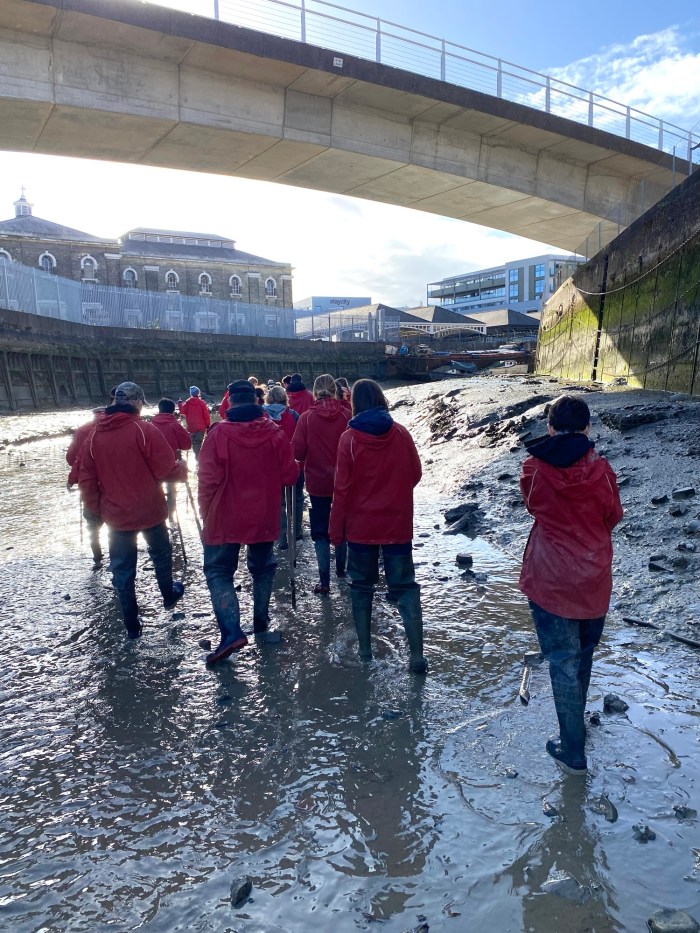
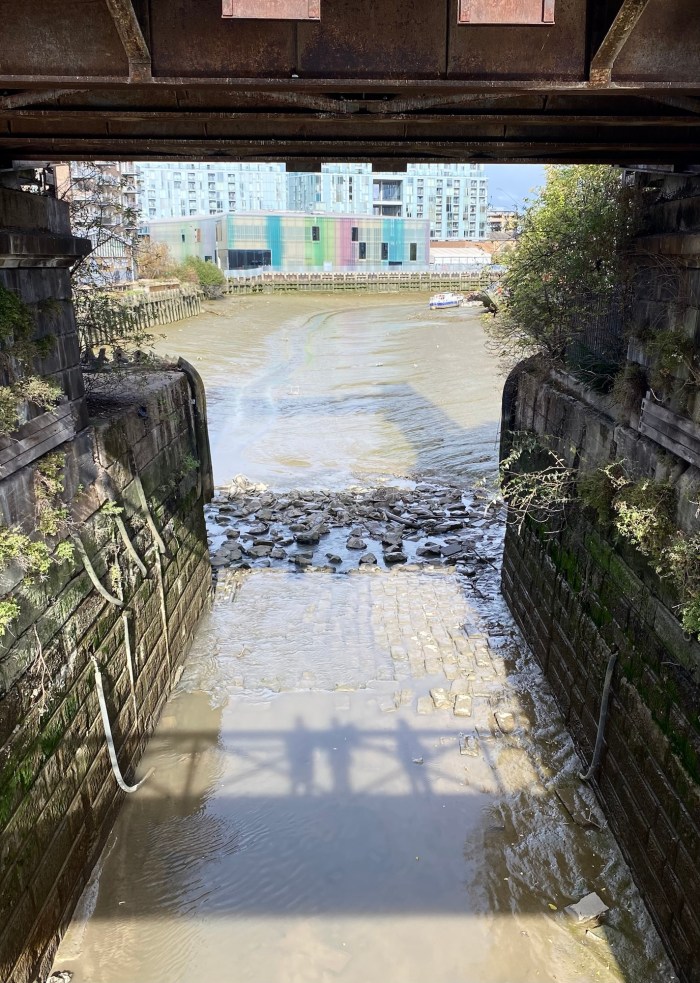
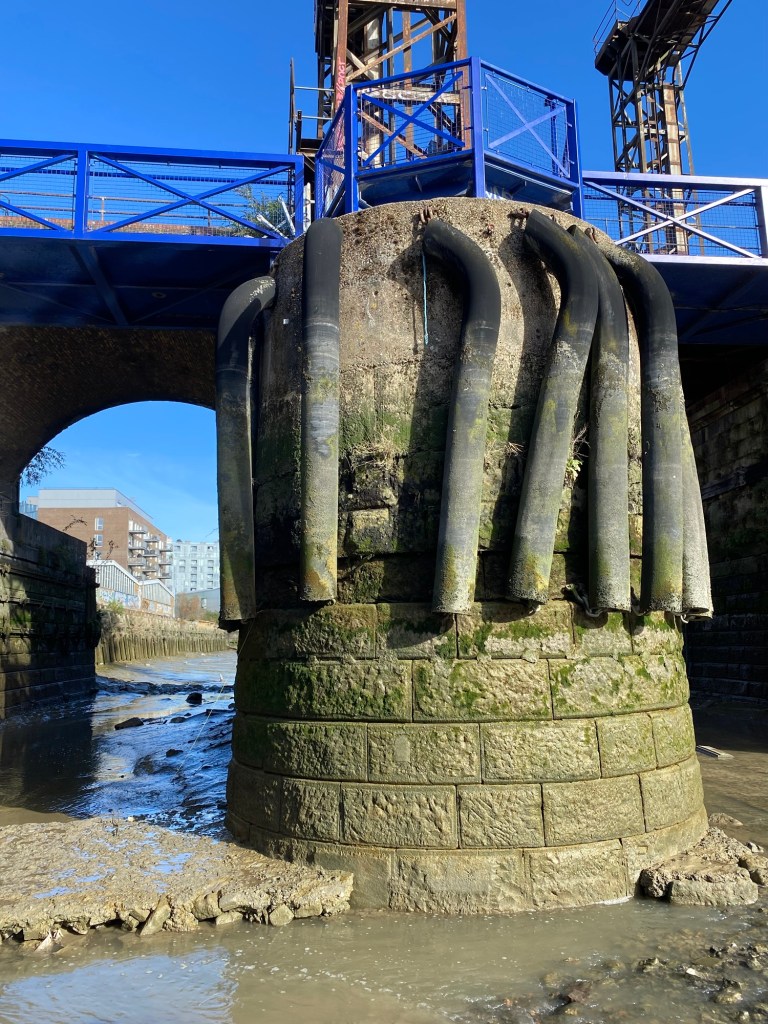
Walking from New Cross Gate, the site didn’t look especially promising at first. A low, shed-like building, surrounded by dense, high rise new developments darkening the rat-run streets and old railway arches below. In this inspiring brownfield site, my first-impressions were swiftly changed. Having changed into waders and bright red waterproofs and equipped with staffs, a group of about twenty of us were led down a path filled with wild plant life, alongside various objects recovered from the creek – vintage vacuum cleaners, VCRs, bikes… Through a gate, we stepped down and onto the shoreline – the only beach in this stretch of the creek – below a railway bridge and opposite a span of the DLR.
From here, we walked south, in and out of thick mud along the course of the Ravensbourne where it flows into the Thames. Our guide Nick, explained where Deptford’s name comes from: Deep Ford – meaning a place on a waterway which can only be crossed at low tide.
This made instant sense, and suddenly seemed obvious. Bringing new life to an old part of London, which if I’d thought about at all, brought images of rough, tough, inner-city blight, dereliction, industrial decline and courtesy of Anthony Burgess, the death of Kit Marlowe.
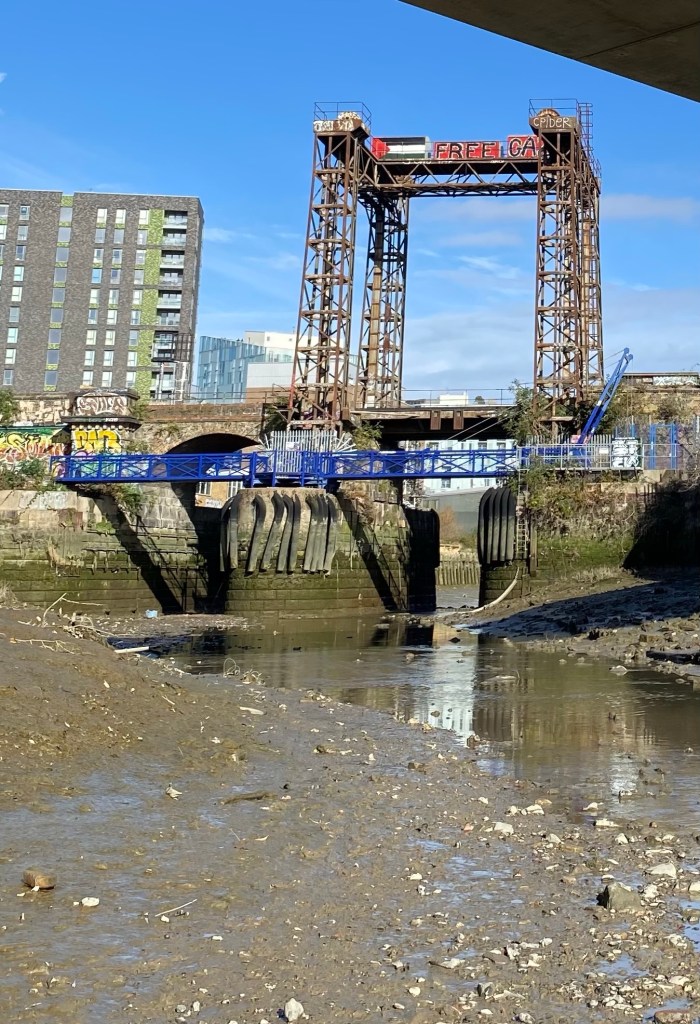
Surrounded on all sides by transport infra-structure, Victorian Sewage works, former warehouses and the aforementioned high-rise developments, urban nature struggled on.
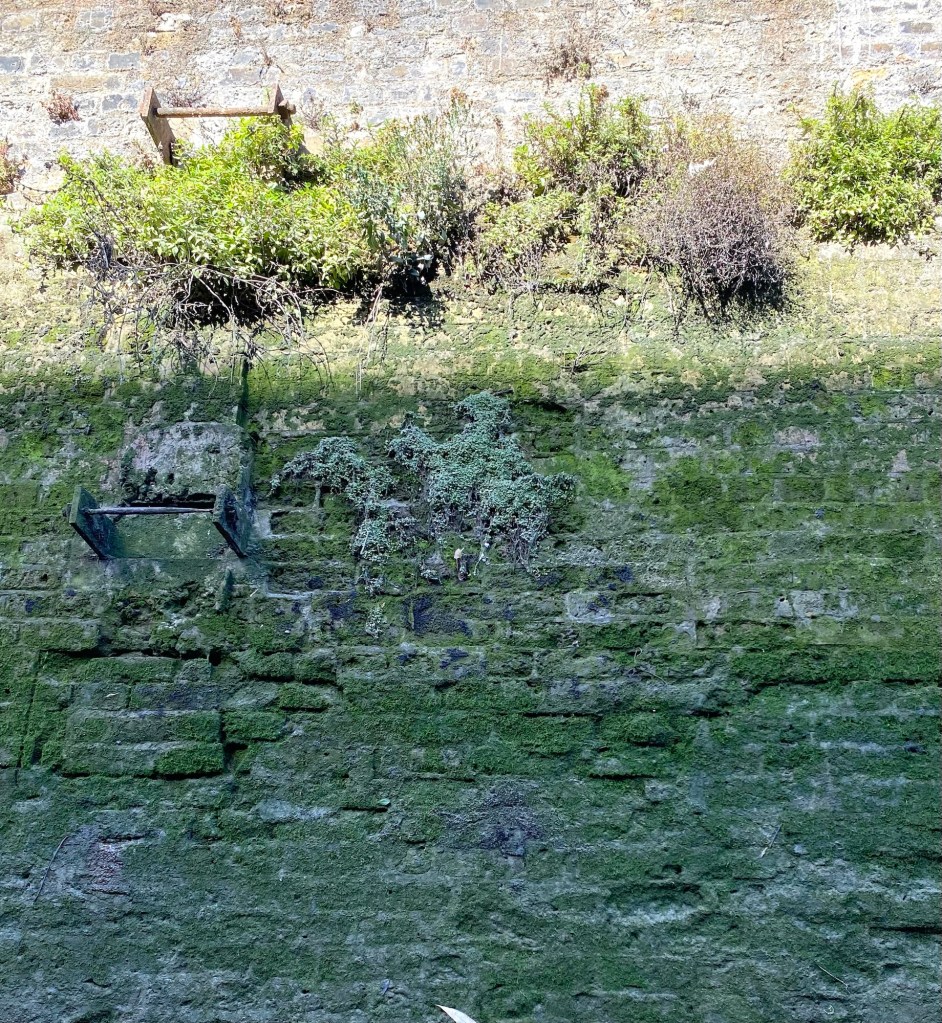
Nick pointed out various types of shore dwelling plant life – native and invasive.
He also revealed the surprising usefulness of upturned shopping trolleys to small fish – who at high tide, in the absence of reedbeds – long destroyed round here – use them to escape being eaten by larger predators arriving from the Thames.
Before turning back, we found the vacated exoskeletons of two Chinese Mitten Crabs – female and male, a dead flounder and various empty shellfish. A family of swans asserted themselves in the middle of the water, overlooked by houseboats. At one point, a kestrel appeared, sweeping from an apartment roof and moving on downstream. Then, a kingfisher made a cameo appearance, flashing past, heading north.
I doubt there can be a more informative wade into urban mudflats to be had.
You can book a low tide walk with Creekside Discovery Centre here