
A Stray Field in South London
An ordinary looking grassy field, at the foot of Gipsy Hill in South London, turns out to be anything but…
An ordinary looking grassy field, at the foot of Gipsy Hill in South London, turns out to be anything but…

Not far from where I work in Clerkenwell, a series of large orange and white flags fixed to lampposts line the major thoroughfares running through Holborn, Chancery Lane, Bloomsbury and St Giles. They state blithely that you are InMidtown, before in tiny print, grudgingly acknowledging the actual names of the places they are attempting to reinvent.
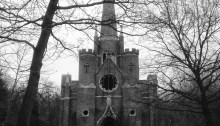
Stamford Hill Motors is not the most romantic of destinations, but I always feel a frisson of excitement when I have to go there. I used to live nearby but no longer, so the annual MOT has become an excuse to visit one of my old North London haunts. It also gives me a legitimate reason to simply…
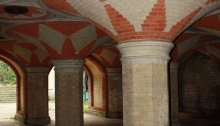
Crystal Palace, geographically at least, is defined by its height: Palace = Hills.
But, hidden beneath busy Crystal Palace Parade, there is something else, a stunningly beautiful place that is usually inaccessible to the public.
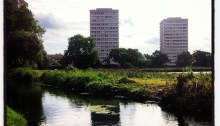
I must admit that when I first heard about the campaign to make London the world’s first National Park City, I thought it was a joke.
And yet the more I thought about it, the more interesting the concept became.

It gives me hope a place like this. A small brown sign outside the Queen’s Hotel, Church Road the only local clue. Stambourne Woods this way, down that gravel drive and through the gate. On the house next door another sign gives red framed warning of a moose who isn’t there. This sliver of…

You can tell a lot about a place from the local shops.
Especially on Norwood Road.

Guest post by Abi Gilbert
When I were a lass – growing up alongside the North Yorkshire moors – my daily life was infused with the magical stories which my Dad told me about sprites and fairies.
No trip into Ilkley, tramp up Hebers Ghyll, or mere visit to the shops was left uninhabited by these mythical beings. I was reliably told, and believed absolutely, that they were hiding behind walls and trees and under bridges. I built homes for these friendly folk, and they sometimes visited in the night to collect the food that I left for them, but I never, ever saw them.

Clevedon: the most boring seaside town in all England; filled with dusty, fusty little sepia-tinted shops, selling dull stuff like lacework, horse brasses and pink and blue vintage porcelain salt-and-pepper sets in the shape of Edwardian ladies.
At least that’s what I used to think…

Tickenham, North Somerset is a long village strung along the B3130 road to Clevedon. On the surface, it’s nothing special, a fairly non-descript ribbon development – the kind of place you either live in or pass through on the way to somewhere else.

Alongside and beneath its hundreds of miles of railway tracks and arches, there exists another London.
A London of inner city edgelands – liminal spaces that create internal thresholds within the metropolis – including, in North London, a working farm.

The Topping and Company bookshop in Ely is so good it’s almost laughable. This is the kind of shop that you don’t expect to find in real life; only, perhaps, in a lost Penelope Lively children’s book, or there to be sneered at for its too-good-to-be-true perfection in a Richard Curtis film.

To celebrate the 256th anniversary of William Blake’s birth. Curiocity – the map magazine –organized a Blake themed walk around Soho, Covent Garden and Piccadilly.

Often its an image, or sense, of the physical presence of a place that draws me to it, but in the case of One Tree Hill, it was the name that attracted me.
A name that seemed so impossibly resonant that I had to see for myself whether the actual hill could ever live up to it.

Some places just sound better than others. Whatever they may actually be like on the ground, there are places with names that seem to possess an inherent resonance and romance.
Others however, just sound a bit crap.

Yesterday, the St Jude storm sent me on something of a dérive within a small area of Lambeth. There were no trains due to the winds, so instead of standing on Tulse Hill’s platform 1, I made for Brixton, but wanting to avoid the main roads, headed up a road I’d never walked along before.

As a reader some books are inevitable. This one had nagged at me for years, before finally, I plunged in and it felt like meeting an old friend.

The pervading spirit of some places hangs quite obviously in the air. Even if you’re only passing through and not looking very hard, the distinctive atmosphere will soon make itself apparent.
West Norwood isn’t one of those places.

It seems ridiculous now, but until I set out on this walk it hadn’t occurred to me that Wallsend, is literally the Wall’s End. As you follow the course of the walk, there are plenty more Wall inspired place names like this to take in, such as Walltown, Wall and Heddon On The Wall.

Islington is not exactly blessed with parks and green space. This makes one of the borough’s great unexpected treasures all the more delightful.

